Local SEO strategy
Mapped high-intent Birmingham search opportunities around food, brunch, cafés, desserts, drinks, birthdays, New Street, city centre and walk-in dining.
UK hospitality · Local SEO · Ads · Landing pages
A full-service visibility system for AQ Foodhall, a UK hospitality destination under AQ Quarter — connecting local SEO, landing pages, blog content, Google visibility, promotional campaigns and conversion-focused page improvements.
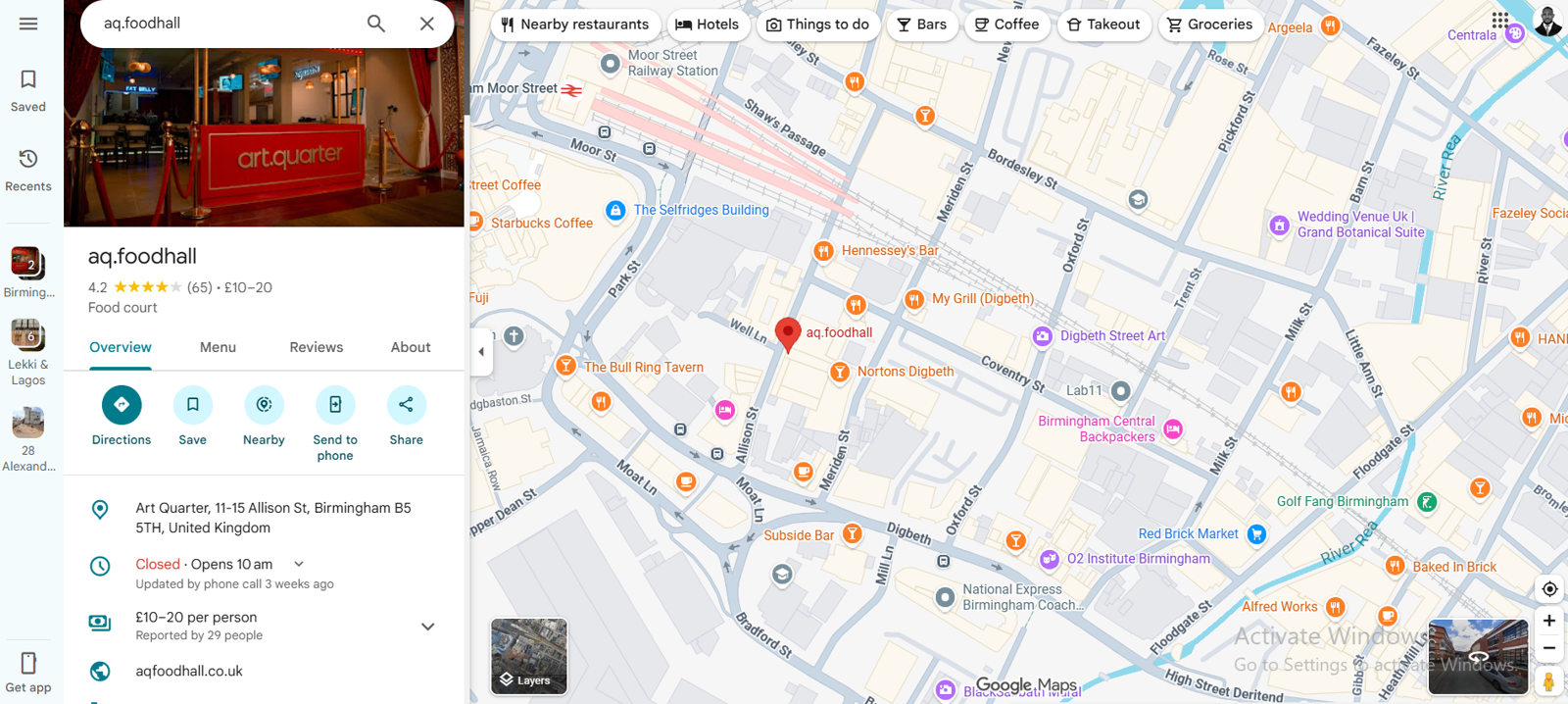 Local Visibility Proof
Impact proof
Placed near the top fold to show real local discovery presence, location authority and the type of visibility hospitality brands want customers to see.
AQ Foodhall is not a small local business. It is a multi-service UK hospitality destination with food, drinks, café-style experiences, group dining, bar-style social energy and multiple reasons for customers to visit.
The challenge was visibility. People in Birmingham were already searching for cafés, matcha, birthday venues, brunch, desserts and food near key city locations. The opportunity was to make AQ Foodhall show up for those searches and convert that attention into visits, reservations and brand awareness.
My work combined SEO strategy, content planning, landing page thinking, promotional campaign support and proof-led copy designed to make AQ Foodhall easier to discover, easier to trust and easier to choose.
Mapped high-intent Birmingham search opportunities around food, brunch, cafés, desserts, drinks, birthdays, New Street, city centre and walk-in dining.
Planned a structured 52-week SEO calendar with 260 unique buyer-intent topics designed to avoid repetition and keyword cannibalisation.
Improved page direction around stronger headlines, clearer visitor intent, better call-to-action flow and more compelling reasons to visit.
Created practical, search-led content samples for matcha, cafés, birthday dinner spots and other Birmingham hospitality discovery searches.
Aligned blog topics with GBP posts, photo updates, review prompts and local discovery signals to support Maps visibility.
Supported campaign messaging and promotional direction so paid visibility could lead to stronger landing pages and clearer customer actions.
Built clusters around local destination, brunch and coffee, desserts and viral treats, desi street food and healthy drinks.
Framed KPIs around clicks, impressions, CTR, indexed pages, GBP actions, calls, direction requests and commercial search movement.
The strategy was to stop treating AQ Foodhall as a single restaurant page and position it as a destination that can answer multiple buyer intents: where to eat, where to meet, where to drink, where to celebrate and what to order.
I selected only the strongest proof here: a 12-month content system, buyer-intent blog samples and local search pages that show how visibility work turns into customer demand.
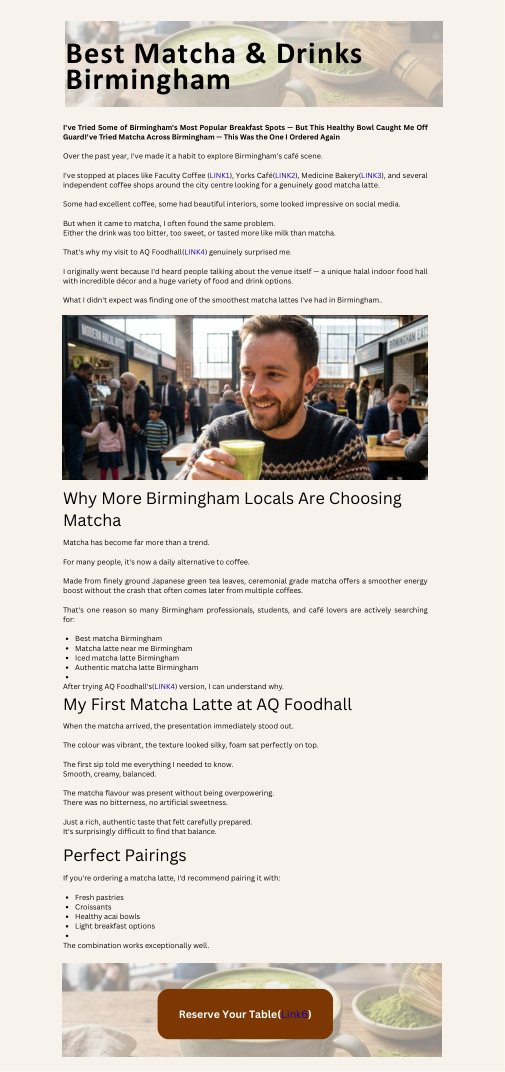
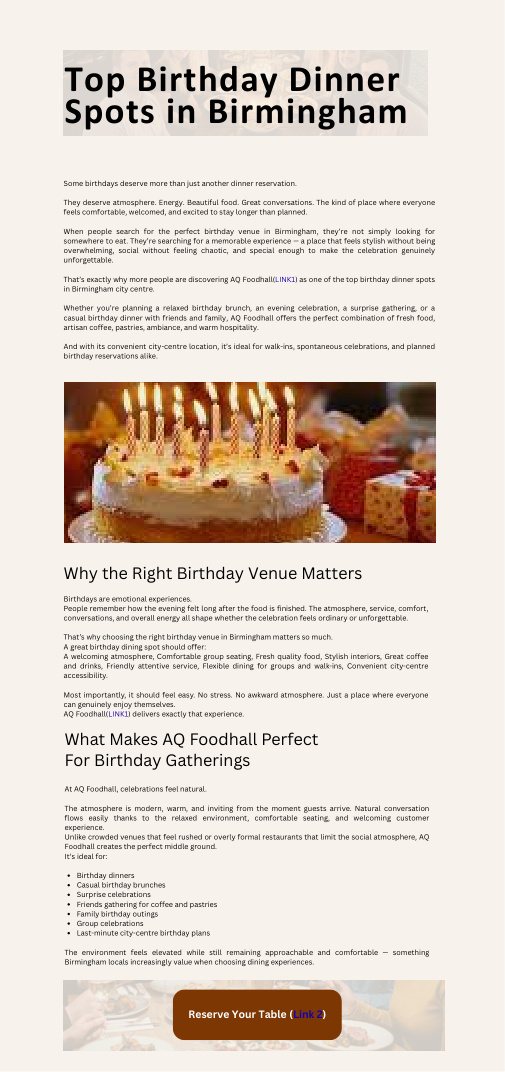
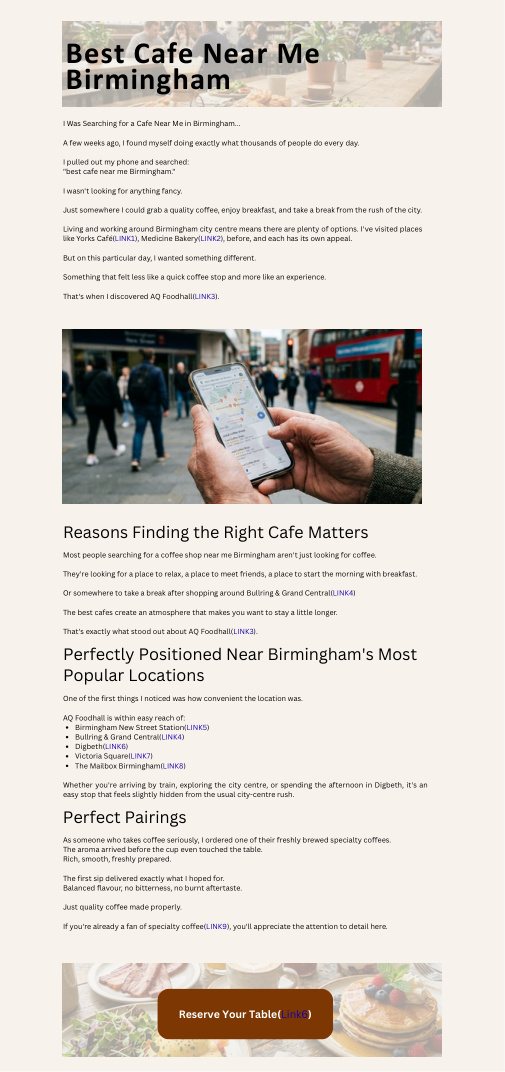
This work created a practical visibility roadmap for AQ Foodhall: what to publish, why it matters, how it connects to local search and how it supports real-world visits.
A full year of buyer-intent topics mapped around local destination searches, brunch, coffee, desserts, street food, chai and healthy drinks.
The strategy grouped content into local destination, brunch and coffee, desserts, street food/chai, and healthy/refreshing categories.
The early plan prioritised searches around New Street, city centre, brunch, croissants, cheesecake, chai, matcha and healthy food.
Each article direction could become a GBP post, review prompt and local discovery signal to improve Maps trust.
Landing pages and blogs were written around visitor intent, clear CTAs and stronger reasons to visit or reserve.
The plan tracks clicks, impressions, CTR, indexed pages, GBP actions, calls, direction requests and buyer engagement.
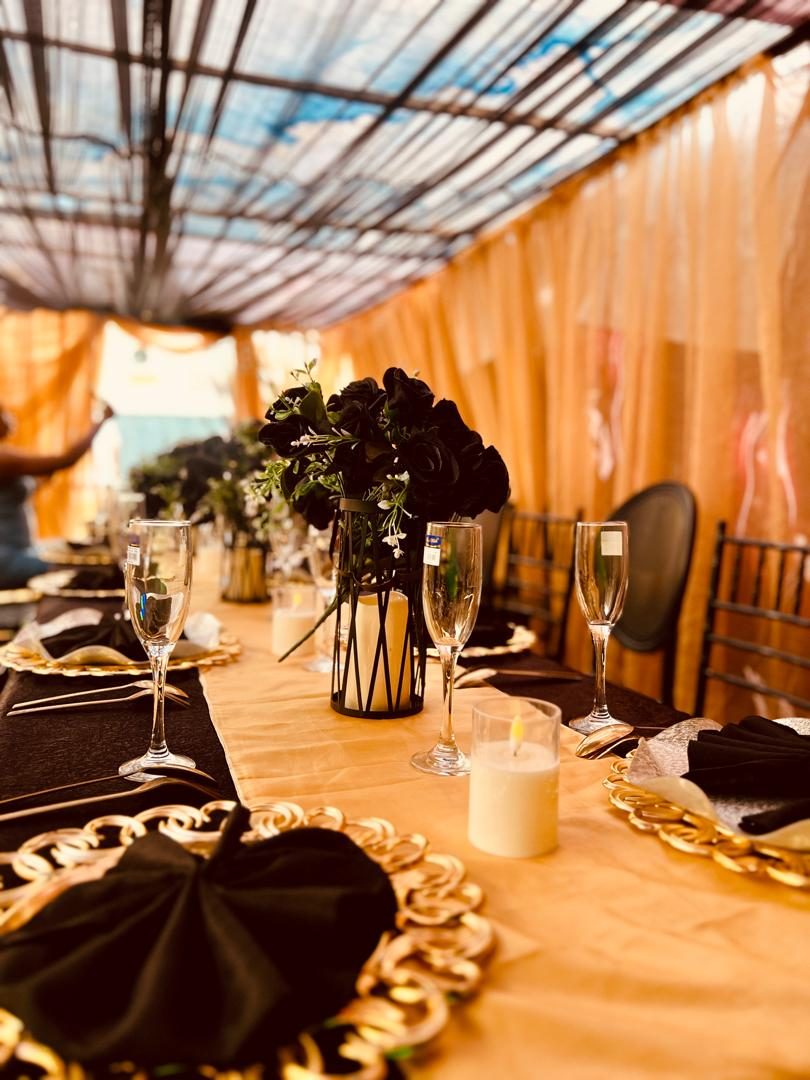
People rarely choose a venue from one touchpoint. They search, compare, check photos, read content, look at Maps, scan the offer and decide whether the place feels worth visiting.
My work helps hospitality brands connect those touchpoints: SEO, GBP, content, landing pages, promotional ads and conversion-focused copy working together as one visibility system.
If your venue depends on local discovery, walk-ins, bookings, group visits, Maps visibility or seasonal promotions, the website cannot be passive. It needs to work like an always-on sales and discovery asset.